
GrowthStack Advisory / AI in the GTM Stack
AI is a layer across your GTM stack, not another tool in it
The short answer
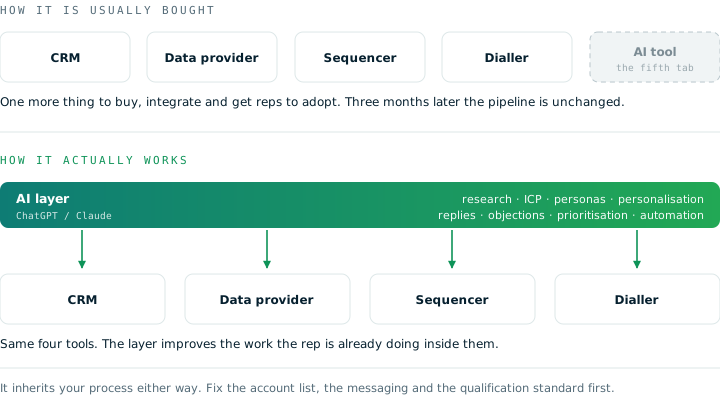
AI works best as a layer across the tools your team already uses, not as a separate tool added to the stack. In practice that means using ChatGPT or Claude for account research, ICP analysis, persona work, personalisation, reply analysis, objection handling, lead prioritisation and workflow automation, improving work reps are already doing. Adding an AI tool to a stack where the ICP, messaging and qualification standard are unclear does not fix the process. It scales it.
- The layer sits across the stack, it is not a ninth tab to buy and onboard
- It improves existing tasks, research, prioritisation and personalisation reps already do by hand
- It inherits your process, so a vague ICP produces well-researched messages to the wrong list
- Fix the order first, account list, then messaging, then qualification, then the layer
Every few weeks a founder asks me which AI sales tool they should buy. The question is usually a symptom of the thing that is about to go wrong.

Founder, GrowthStack Advisory. 10+ years building SDR and GTM systems at Locus, GoComet, and Landmark Group. LinkedIn.
· 4 min read
Why the question is wrong
Behind "which AI tool should we buy" sits an assumption: that AI is a category you add. You have a CRM, a data provider, a sequencer and a dialler, so you add an AI tool and now you have five. Budget approved, tool onboarded, and three months later nothing about the pipeline has changed.
The real shift in how I work over the last year has not been a new platform. It has been using ChatGPT and Claude as a layer sitting across the tools a rep already has open, improving work they were doing anyway.
Where the layer actually touches the work
In practice it shows up in eight places, none of which are a new tab in the stack.
Which stack those eight places sit on top of is a separate decision, and it is made by team size rather than by category. That is set out in the B2B sales tool stack by team size.
- Account research, before a list is built rather than after a rep has already sent to it
- ICP analysis against closed-won and closed-lost, not against a firmographic filter
- Persona work, turning what buyers actually said on calls into language a rep can use
- Personalisation at volume, where the input is real research rather than a merge field
- Reply analysis, reading what came back across a campaign and naming the pattern
- Objection handling, built from the objections your team is genuinely hearing
- Lead prioritisation, so the rep works the top of the list rather than the top of the inbox
- Workflow automation across CRM and outbound, removing the admin that eats selling hours
Every one of those already existed as a task. The layer makes them faster and more consistent. It does not replace them, and it does not add a ninth thing to buy.
Why the standalone framing fails
A standalone AI tool has to win a slot in a stack that is already full, integrate with the four things around it, and get adopted by reps who did not ask for it. Most do not clear all three. The ones that do tend to be doing something narrow and mechanical, which is fine, but it is not the shift people think they are buying.
The deeper problem is that a tool sitting beside your process cannot fix your process. It inherits it.
The part nobody wants to hear
I have been looking closely at the newer enrichment and research platforms, and the pattern that worries me is the same one AI has in general. They are very good at executing whatever you point them at. If your ICP is vague, your messaging is generic and your qualification standard was never written down, that capability does not help you. It gives you a more sophisticated way to automate a weak process, at higher volume, with better reporting on how little it produced.
Automation applied to a weak process does not fix the process. It scales it.
The order that works
Get the account list right. Get the messaging to a point where a rep can defend it on a call. Write down what qualified means and hold the team to it. Then put the layer across it and it compounds.
Do it the other way round and you will have spent a budget sending more of the same emails to a slightly better researched version of the wrong list. The sequence is the same one we use to build an outbound engine, and it starts with an ICP sales will actually use rather than with tooling.
Tools I have not implemented
I have not run a full client implementation of Clay, Smartlead or Cognism. I can see where each one fits and I have views on the category, but I am not going to tell you how to configure something I have not configured for a client.
My hands-on data and outbound experience is Apollo, ZoomInfo, Lusha, Sales Navigator, Instantly and Lemlist, and which of these I have actually implemented is set out separately. Those comparisons are written up in Apollo vs ZoomInfo and Instantly vs Lemlist. The AI layer described above is what I am running across them today, and if that changes for the three tools above, this page will say so.
References
- Gartner. The B2B Buying Journey. Buyers spend roughly 17% of the buying process meeting supplier sales teams in total, and only 5 to 6% with any one supplier.
- Apollo. Pricing and plan limits, referenced for stack cost comparison. Accessed September 2026.
For companies whose product is itself AI, the same reasoning applies to how they sell: GTM and outbound for AI startups.
Related reading
The three activities this layer runs across are mapped in pipeline comes from three activities working together. The clearest production example of this argument is Salesforce in Claude: AI running across the CRM rather than sitting beside it. The same pattern across the rest of the stack is in Claude for sales teams. The tool-by-tool view is the best AI tools for sales development, and the stack-level decision is the B2B sales tool stack, chosen by workflow.
Questions
Should we buy an AI sales tool?+
Usually not as a standalone addition. A separate tool has to win a slot in a stack that is already full, integrate with the tools around it, and get adopted by reps who did not ask for it. AI produces more value as a layer across the CRM, data provider and sequencer you already run, improving account research, prioritisation and personalisation that reps are doing by hand today.
Will AI fix a low reply rate?+
Not on its own. If the ICP is vague, the messaging is generic and the qualification standard was never written down, AI produces better researched messages to the wrong list. Fix the account list, the messaging and the qualification standard first, then apply the layer across them.
Tell us where the funnel leaks
We will tell you whether it is a targeting, execution, or qualification problem, and what it would take to fix.
Book a CallWritten with AI assistance from Shobhit Gupta’s notes and client work, then reviewed and edited by Shobhit Gupta on .